Why most AI proof-of-concepts fail in production: lessons from 12 Dutch implementations
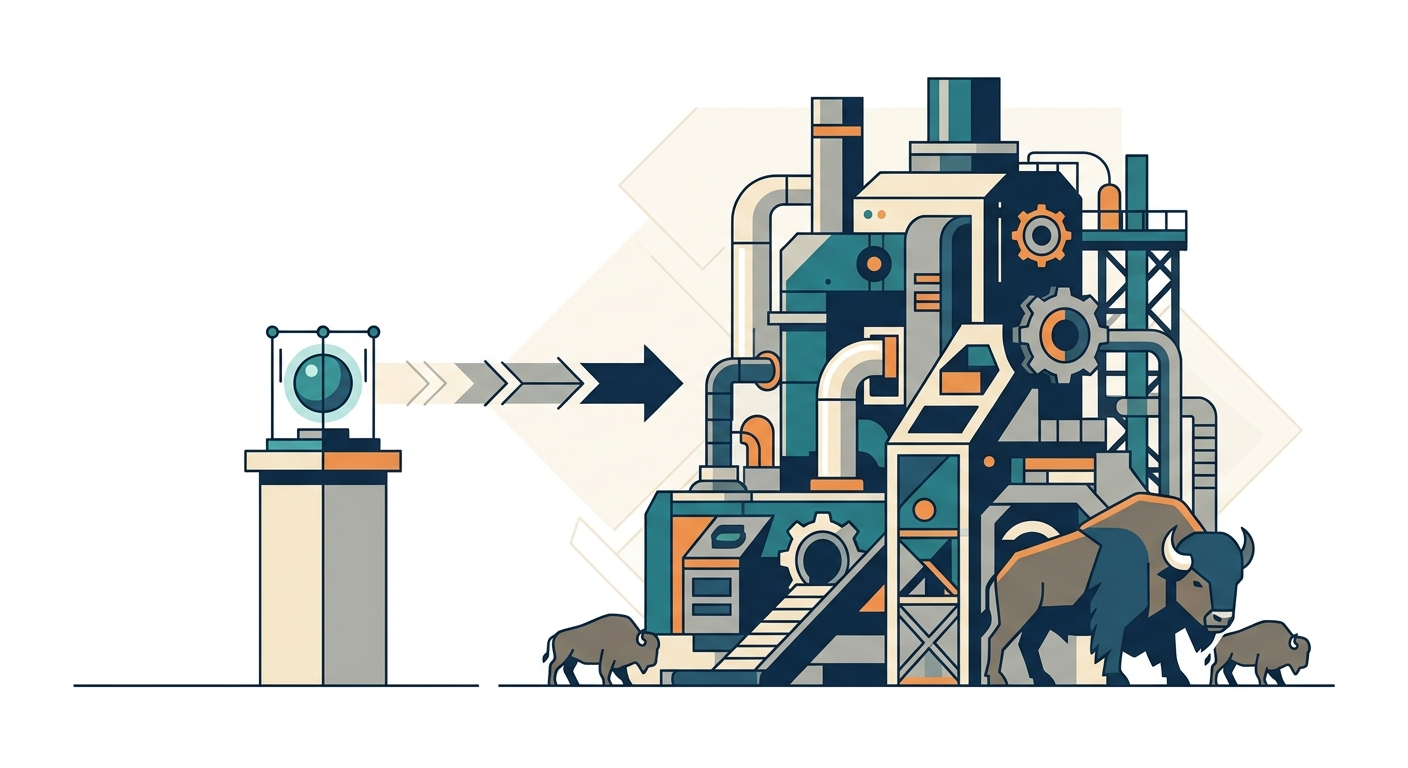
The demo worked beautifully. Stakeholders applauded. Six months later, the project quietly disappeared from the roadmap. If that sounds familiar, you are not alone. Across the Netherlands, organisations are discovering that building an impressive AI proof-of-concept and implementing a dependable production system are fundamentally different challenges.
I have worked on twelve AI implementations at Dutch companies, from logistics organisations in Rotterdam to financial-services providers in Amsterdam. I have seen consistent patterns separating the 30% that reach production from the 70% that do not.
The gap between a demo and production is larger than expected
Most AI proof-of-concepts succeed because they are designed to succeed. They use clean, curated datasets. They run on powerful development machines. They are evaluated by the people who built them. Those conditions rarely survive contact with operational reality.
In a logistics application in Rotterdam, a route-optimisation model reached 94% accuracy during the proof-of-concept phase. In production, that fell to 67%. The culprit was not the algorithm but the data. The proof-of-concept used historical shipping data that had been cleaned manually for years. The production system received raw data with inconsistent formats, missing fields, and occasional GPS errors.
This gap is not a lack of technical competence. It is a fundamental misunderstanding of what a proof-of-concept needs to prove. A successful proof-of-concept shows that something could work under ideal conditions. Production requires evidence that it will work under real conditions, consistently and at scale.
Four patterns that break production implementations
1. Infrastructure assumptions are wrong
Development environments are forgiving. Production environments are not. A financial-services provider in Amsterdam built a fraud-detection model that performed well on data-science workstations. When it was deployed on their existing on-premise infrastructure, latency reached three seconds per prediction — far too slow for real-time transaction screening.
The team had assumed cloud deployment from the beginning. Security requirements required local hosting. Nobody tested inference speed on the actual target hardware until three months into the project.
2. The data pipeline is fragile
Every AI system is only as dependable as the data pipeline feeding it. In a healthcare analysis project, the proof-of-concept read from one well-maintained database. Production required integration with seven different systems, each with its own update schedule, data format, and occasional downtime.
The model did not fail. The data pipeline failed — repeatedly. In production, it becomes surprisingly difficult to distinguish between “the model is wrong” and “the model received bad data”.
3. Organisational integration is a blind spot
Technology is often the easy part. A Dutch manufacturing company built an effective predictive-maintenance system. The model accurately identified equipment likely to fail within 72 hours. But the maintenance team’s planning system could not process ad-hoc work orders. Union agreements required schedule changes to be announced 48 hours in advance. The insight existed, but nobody could act on it.
Production AI systems do not exist in isolation. They must connect to existing processes, tools, and human workflows. These integration points are rarely considered during proof-of-concept development.
4. Monitoring and maintenance are missing
Models degrade. Data distributions shift. User behaviour changes. A customer-service chatbot for an e-commerce company initially performed well, but gradually became less useful as product lines and customer questions evolved.
Without monitoring, nobody noticed until customer complaints increased sharply. The proof-of-concept had no concept of model-drift detection. Production systems require continuous observation and periodic retraining — activities that need dedicated resources and clear ownership.
What successful implementations do differently
The implementations that reached production shared characteristics that separated them from failed attempts.
They started with production constraints. Instead of building the ideal solution and hoping it would fit, successful teams identified infrastructure constraints, data availability, and integration requirements before writing code. This approach is slower at the start, but prevents expensive changes later.
They involved the people responsible for operating the system. Their concerns about monitoring, maintenance, and failure modes shaped the architecture while it could still be changed cheaply.
They designed for failure. Successful production systems include graceful-degradation paths. When the model cannot make a reliable prediction, the system falls back to rule-based logic or human review. This preserves operational continuity when the AI component performs poorly.
They defined meaningful success measures. Proof-of-concept reporting often focuses on model accuracy. Production measures also need to cover latency, throughput, system availability, and business outcomes. A model that is 98% accurate but unavailable 10% of the time may be less valuable than a model with 90% accuracy and 99.9% uptime.
The trade-off
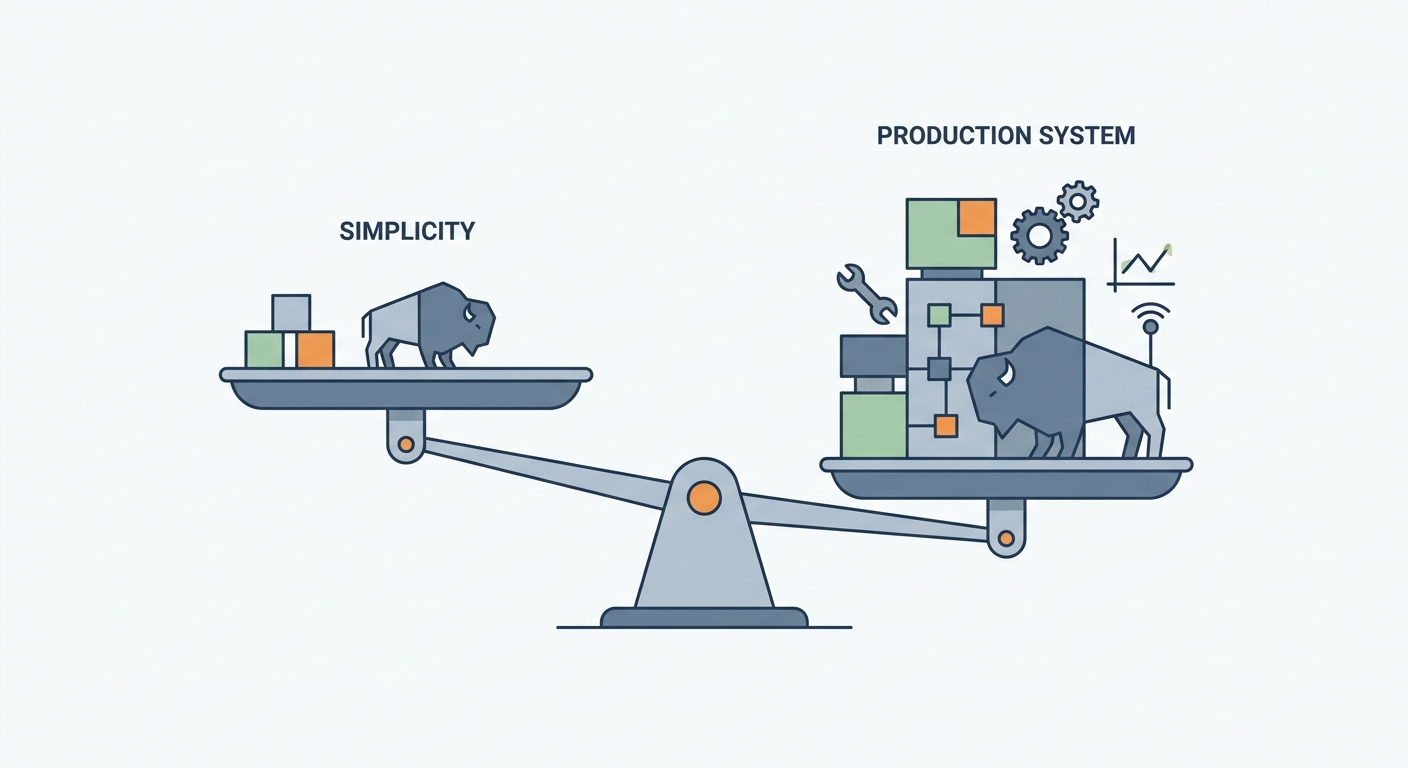
Not every AI initiative should go to production. Sometimes a proof-of-concept shows that operational complexity outweighs the potential benefit. That is a valid outcome — an expensive lesson is still cheaper than a failed production implementation.
The question is not whether your proof-of-concept produced impressive results. The question is whether the route to production is understood, funded, and feasible within your organisation’s constraints.
Moving forward in practice
If your organisation is planning AI initiatives, consider running a production-readiness assessment alongside technical feasibility studies. Map the data pipelines, identify integration points, clarify who owns ongoing maintenance, and estimate the full operating cost — not only the development cost.
For projects already in the proof-of-concept phase, an honest review of production requirements before committing more resources can prevent significant wasted investment.
At Bizonbyte, we have helped Dutch organisations make this transition repeatedly. If you are unsure whether your AI initiative is ready for production — or want to avoid the common traps — a focused technical assessment can create clarity before costs escalate.
When your AI proof-of-concept looks promising but crashes in production.